Ashtray | MB 23 E
Marianne Brandt, 1924
When Marianne Brandt joined the Bauhaus in Weimar in 1924, she began working in the metal workshop headed by László Moholy-Nagy. That same year, she designed the MB 23 E ashtray – one of her earliest Bauhaus designs and a remarkable example of her ability to combine function, material and geometric form.
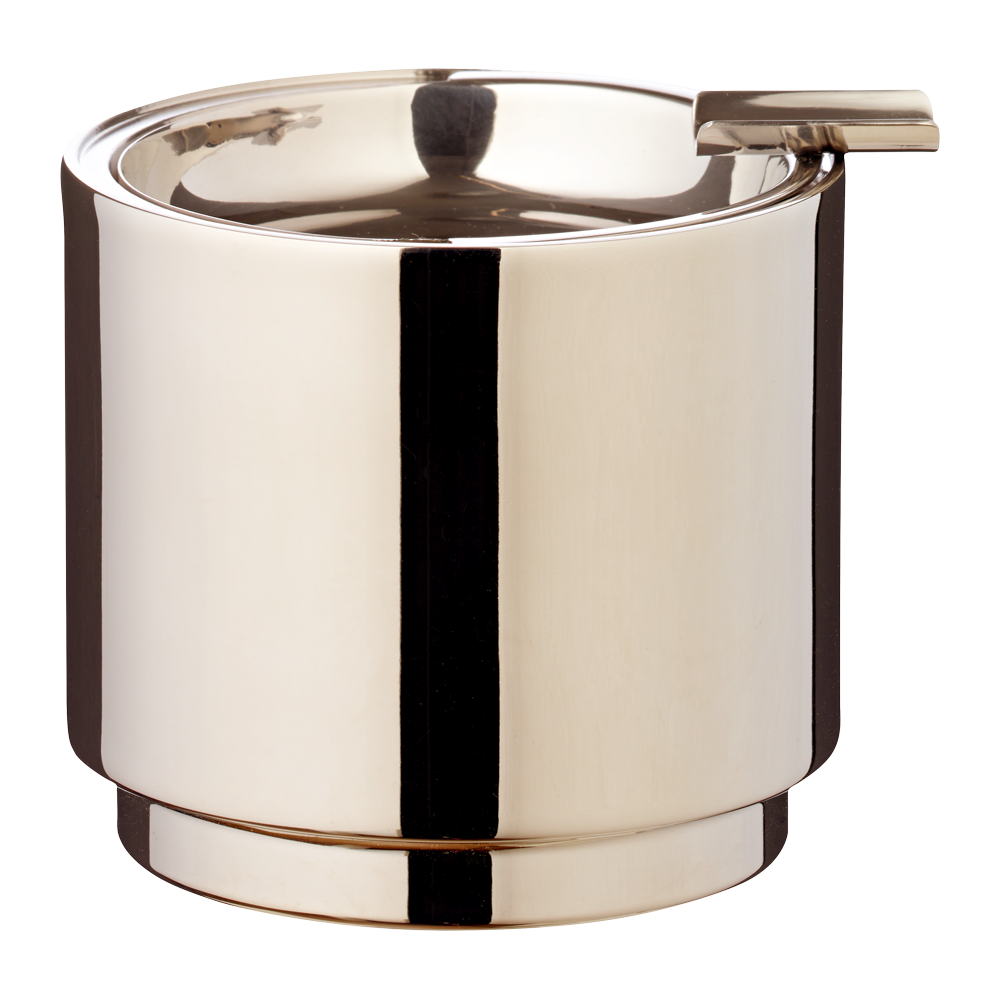
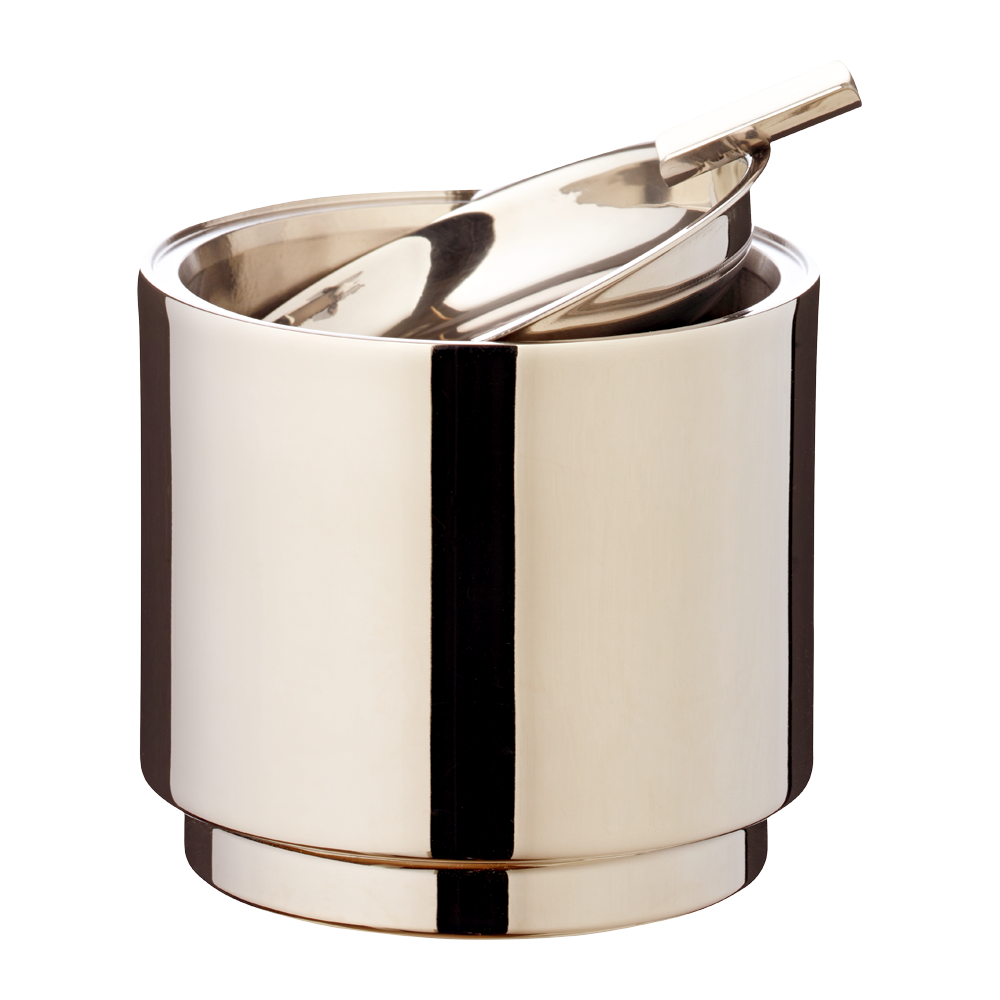
The cylindrical body and movable lid form a construction that is as simple as it is ingenious. A gentle tilt of the lid allows the ash to fall into the container below. The opening then closes again, keeping ash and odours largely concealed inside while preserving the object’s clear exterior form.
Marianne Brandt created a functional solution that was later adopted and adapted in numerous ashtray designs. What may seem self-evident today was a distinctly modern and progressive design idea in 1924.
Reduced to the essentials
The MB 23 E reflects the Bauhaus principle of constructing everyday objects from simple geometric forms. The cylinder, the circle and the gently curved surface of the lid define its appearance. There are no decorative elements to distract from its function. Yet the ashtray is anything but austere: its precise proportions and the reflections on its polished surface give it an almost sculptural presence.
Even in this early design, the approach that would come to characterise Marianne Brandt’s later work is clearly evident. She did not regard everyday objects as incidental items, but as carefully considered elements of a modern living environment.
Historical examples of the ashtrays Brandt designed at the Bauhaus in 1924 can now be found in major museum collections, including the Museum of Modern Art in New York, where they are preserved as important examples of modern product design.
TECNOLUMEN manufactures the MB 23 E in polished stainless steel. The material emphasises the clarity of its construction while giving this compact functional object the presence of a small sculpture. More than 100 years after it was created, the design still appears remarkably natural, relevant and modern.
Design: Marianne Brandt, 1924
Material: Polished stainless steel